The Wire
Gold Sinks, Silver Slides: 4 Safe-Haven Myths, Busted
Gold opened lower on August 31 even after U.S. strikes on Iran, and silver slid as September rate-hike odds hit 61.9%. Four durable myths meet the tape.
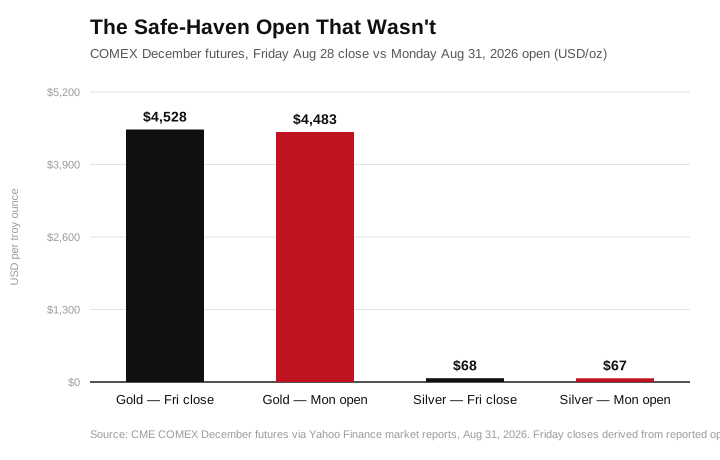
Analysis — Gold opened at $4,483.20 an ounce on Monday, August 31, 2026, down 1.0% — hours after U.S. strikes on Iran, the exact scenario safe-haven marketing promises protection from. Silver dropped 1.4% at the open. The safe-haven pitch failed its live-fire test. Here is what the tape actually shows.
By 8:39 a.m. ET, silver December futures had recovered to $67.84, and gold trimmed losses through the morning. But the opening print is the story. Two of Wall Street's most heavily advertised fear trades opened lower on a day when fear was the headline. Four myths did most of the damage in retail portfolios this summer. Each one fails against the numbers.
Myth 1: War Always Lifts Gold
The claim: Geopolitical conflict sends investors scrambling for bullion, so holding gold before a crisis is free insurance.
What the data actually shows: On August 31, COMEX December gold futures opened at $4,483.20 per troy ounce, down 1.0% from Friday's close of roughly $4,528 — despite U.S. military strikes on Iran over the weekend. Yahoo Finance's market wrap carried the move in its headline. It was not a one-off. On July 21, gold fell below $4,000 as higher Fed rate expectations overwhelmed Iran-driven safe-haven demand, according to Crux Investor's market commentary. And in March 2026, gold hit its low for the year as U.S. strike plans moved through the headlines, rebounding only after the strikes were delayed.
Where the myth comes from: Selective memory. Gold did spike during the 2020 pandemic shock and after Russia's 2022 invasion of Ukraine. Marketing decks show those charts. They omit 2026, when the metal repeatedly sold off on the war trade it was supposed to own.
The fine print: Positioning matters more than headlines. By late August, futures traders were already long gold after a run that peaked above $4,500 — the World Gold Council's Q2 report shows Western gold ETFs shed 45 tonnes during the quarter even as central banks bought 289 tonnes. When everyone who wanted protection already owned it, the headline became a reason to sell, not buy.
Bottom line: War is not a gold strategy. It is a coin flip that dealer marketing has relabeled as a law.
Myth 2: Silver Is Leveraged Gold
The claim: Silver moves like gold but faster, so it is the smart way to amplify a metals bet.
What the data actually shows: Silver December futures opened at $66.80 on August 31, down 1.4% — a bigger loss than gold's 1.0%. That direction is typical, but the relationship is not the leverage story pitchmen sell. The gold-to-silver ratio sat near 66 on August 31, per USAGOLD's daily market report, meaning an ounce of gold bought about 66 ounces of silver. That ratio has swung between roughly 30 and 120 over the past four decades. Two metals, two demand pictures: over half of silver demand is industrial, from solar panels to electronics, while gold demand is dominated by investment and jewelry.
Where the myth comes from: The 2010–2011 episode, when silver ran from under $20 to nearly $50 an ounce. That was an industrial-demand story plus a short squeeze, not a gold trade with a multiplier attached.
The fine print: When silver's industrial side sneezes, silver falls with copper, not with gold. Households buying silver as "cheap gold" are buying a different asset with a similar ticker.
Myth 3: Rate Hikes Are Automatic Doom for Metals — or Irrelevant
The claim: Both camps oversimplify. Bugs say metals always fall when the Fed tightens; promoters say real assets don't care about policy rates.
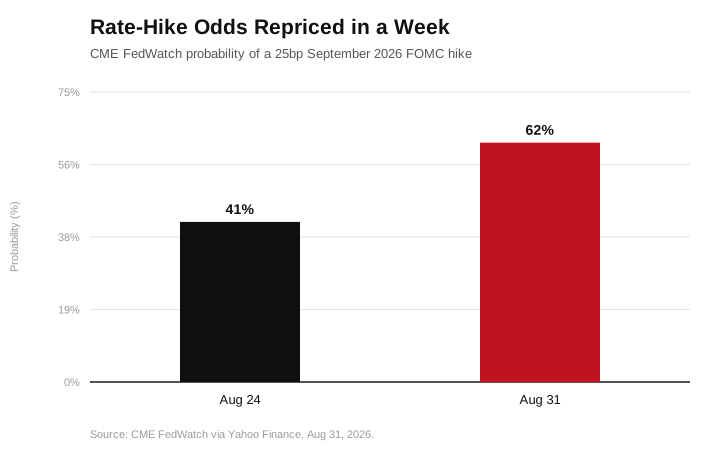
What the data actually shows: Rates are the single most reliable transmission channel into metals prices, and August 31 was a live demonstration. The probability of a 25-basis-point September hike jumped to 61.9% from 41.4% a week earlier on the CME FedWatch tool, after Fed Chair Kevin Warsh used his August 28 Jackson Hole speech to warn the Fed still has work to do on inflation. Barclays now forecasts two hikes in 2026. Both metals opened lower on exactly that repricing. The mechanism is mechanical: gold and silver pay no interest, so when Treasury yields rise, the opportunity cost of holding a bar of metal rises with them.
Where the myth comes from: The 1970s, when gold soared while rates were high — but inflation was higher. Metals respond to real rates (yields minus inflation expectations), not the headline policy number. Our autumn rate watch tracks that spread week to week, and it has explained metals' direction better than any war headline this year.
The fine print: This cuts both ways. If Warsh's hikes crush inflation expectations faster than nominal yields rise, real rates climb and metals sag. That is the current setup — and the reason the war bid keeps failing.
Myth 4: Precious Metals Hedge Your Grocery Bill
The claim: Gold protects purchasing power, so it belongs in every household portfolio as an inflation shield.
What the data actually shows: The long-run math is unkind. One long-horizon comparison by Perkins Wealth Advisors finds gold rose 4.3 times over the study period — barely ahead of the CPI's 4.1 times. That is preservation minus volatility, not growth. Over the same kind of stretch, U.S. equities multiplied many times over. For households with a genuine inflation worry, Treasury inflation-protected securities pay a real yield with the full faith and credit of the U.S. government; gold pays nothing and can drop 1% on a Monday morning, as it just did.
| Asset | Long-run result | Catch |
|---|---|---|
| Gold | 4.3x price gain, roughly matching CPI (4.1x) | No yield; 2026 swings of $400+ per ounce |
| U.S. equities (S&P 500) | Multiples of CPI growth with dividends reinvested | Deep drawdowns (2008, 2020, 2022) |
| TIPS | CPI plus a guaranteed real yield | Taxes due annually on inflation adjustments |
Where the myth comes from: Radio and mail pitches aimed at retirees. The CFTC and FINRA have both issued investor alerts warning that precious-metals IRA promoters target older workers and retirees with fear-based advertising. The mechanics are expensive: a U.S. Senate Aging Committee investigation found wholesale dealers typically charge a spread of 3% to 5% of the metal's market price — before storage, insurance, and IRA custodian fees.
Who this is not for: Anyone under 50 building retirement savings, anyone carrying credit-card debt at 25% APR, and anyone who would need to sell within five years. Metals are the wrong tool for all three — the spread and storage costs alone guarantee a loss at purchase. Automated portfolio tools, including the AI finance agents now used for rebalancing, typically allocate zero to physical metals for exactly these reasons.
When a Small Allocation Actually Belongs
The exceptions are real but narrow. A 5% or smaller allocation can serve as portfolio ballast for investors who hold large equity positions and would panic-sell in a 30% drawdown — behavioral insurance, not return-seeking. Bullion-backed ETFs avoid the 3–5% dealer spread; futures are for institutions, not kitchens. And the central-bank bid is genuine: the World Gold Council's Q2 2026 report logged 289 tonnes of official-sector purchases, up sharply from the prior quarter. Sovereign buyers are price-insensitive. Households are not.
The bottom line from August 31: gold sank on a war weekend, silver slid on rate repricing, and the marketing kept playing. The tape does not care about the pitch.
Frequently Asked Questions
Why did gold fall after U.S. strikes on Iran?
Because positioning and rates beat headlines. Futures traders entered the weekend already long after a run above $4,500, and September Fed-hike odds jumped to 61.9% the same morning. War headlines matter less than the cost of holding a zero-yield asset when real rates rise.
Is silver a cheaper way to buy gold's upside?
No. Silver is a different asset: over half its demand is industrial, so it trades with the economic cycle, not just with gold. The gold-to-silver ratio has ranged from roughly 30 to 120 over four decades — that is volatility, not leverage.
What is the cheapest way to hold gold if I want some?
Bullion-backed ETFs, which avoid the 3–5% dealer spread and storage fees that physical sellers charge. Keep any allocation to about 5% of the portfolio, and skip leveraged products entirely.
Keep Reading
Checking Account Fees Are Creeping Back in 2026
Checking account fees are increasing in 2026. Explore which banks are charging what, with a focus on transparency and hidden costs.
Shoulder Season Is Shrinking. The Savings Are Too
Fall 2026 shoulder-season airfare discounts are narrowing as dynamic pricing compresses the September sweet spot. Here's where savings still exist.
Subscription Price Hikes: The 2026 Roundup
Explore the latest 2026 subscription price hikes, including streaming, software, and news services. Learn how rates have changed.